

How To Protect Yourself Against Bugs
If you think that bugs are just wishy-washy bugs that cause flu, tummy upsets and other relatively minor inconveniences – think again.
Infectious diseases are now a major threat to your health – and your family’s health.
There are several main reasons why infectious diseases are back.
First, international air travel means that killer bugs can be brought from the jungle to the city within hours. There was far less danger when infected individuals travelled on slower, more traditional forms of transport. Patients carrying the disease would have died long before they reached heavily populated cities.
Second, bugs such as viruses are constantly changing – and getting stronger. As scientists produce new vaccines, existing viruses adapt and change. The deadly Ebola virus used to be transmitted through the blood. But changes to the virus in a laboratory means it can now spread through the air – like flu. In 1918-19 a flu bug far less deadly than the Ebola virus killed 25 million people. Genetic engineers experiment with viruses (sometimes for military purposes) and produce new, stronger, more lethal infections.
Third, vivisectors in laboratories around the world are constantly giving existing viruses to animals. They use some of the rarest and most deadly viruses. Some of the research work is done for the military – who want ever more lethal viruses for biological warfare. Problems really start when viruses – or infected animals – escape from laboratories. There are countless billions of viruses in the world -each one a thousandth the size of a bacterium. Everyone could be a ticking time bomb.
Fourth, the overprescribing and abuse of antibiotics means that bugs have acquired immunity and have become stronger and more lethal.
- Your body’s immune system helps to protect you against infection. If your immune system – your inbuilt defence system – is in tip-top condition then you will be far less vulnerable to these marauding bugs. What you choose to cat can have a big effect on the strength and effectiveness of your immune system. You can strengthen your immune system and reduce your susceptibility to infections (and cancer) by changing your diet. You must do everything you can to keep your body’s immune system in tip-top condition. It is vital to eat regular supplies of foods which contain antioxidants. Recommended foods include: apples, asparagus, baked beans, broccoli, brown rice, Brussels sprouts, cabbage, cauliflower, chick peas, corn, grapefruit, lentils, oats, oranges, peas, pineapples, potatoes, soya beans, spinach, strawberries. I also recommend taking sunflower and pumpkin seeds daily.
- Unless your diet naturally contains garlic then I recommend that you take a garlic supplement every day.
- If you eat meat it is important that you give it up – particularly if you have an infection which is being treated with antibiotics. The spread of a number of killer infections has been traced to meat shipments. The basic cause is simple: farmers routinely feed antibiotics to their animals to keep them healthy. Animals which are fed with antibiotics inevitably acquire antibiotic resistant organisms. Repeated problems caused by meat infected with antibiotic resistant E. Coli are a direct result of this still unregulated and uncontrolled farming practice. Many of the people who fall ill after eating infected meat have been taking antibiotics – for throat or ear infections for example. The antibiotic prescribed for the throat or ear infection clears the body of many of its natural infections, allowing the antibiotic resistant superbug to take over a virtually competitor free body.
- Stress will damage your immune system and impair your body’s ability to fight infection. It is, therefore, important that you reduce your exposure to unnecessary stress. Make a list of all the factors which add stress to your life and then avoid those stresses which can be avoided.
- Try to avoid buildings which have closed circuit air conditioning systems. When air is constantly recirculated your chances of acquiring an infection are dramatically increased. If one person sneezes or coughs then the chances are high that everyone in the building will be exposed to the bug.
- You should try to keep away from hospitals, doctors’ clinics and other places where sick people congregate – and where antibiotic resistant bugs are likely to be much in control. I used to favour open plan wards since patients in such wards can be kept constantly under supervision by nurses. The explosion in the incidence of antibiotic resistant bugs means that single rooms are now preferable for any patient requiring hospital treatment.
- Whenever possible you should avoid methods of public transport which recirculate used air. Modern trains tend to have no opening windows – with the result that if one person sneezes in a carriage the chances are that everyone else will be exposed to (and possibly catch their disease).
- If you eat eggs do not ever buy (or eat) eggs with cracked shells. It is much easier for an infection to enter an egg with a cracked shell. Eggs laid by genuinely free range chickens are likely to be healthier than eggs laid by hens kept in battery cages.
- Make sure that your fridge is kept cold enough. The temperature inside your fridge should be below 3 degrees Centigrade.
- Make sure that you wash your hands thoroughly before preparing food. Staphylococcus, for example, can be transmitted hand to hand. Wash all kitchen dishes and cutlery thoroughly in hot, soapy water.
- Never refreeze food which has been previously frozen and then thawed. Thawing increases the number of bacteria and refreezing food increases the chances of infection.
- If you eat meat make sure that it is completely thawed before you start to cook it. If you do not do this then the chances are that the middle of the meat will still be frozen when you start to cook it – and will not be properly cooked when the rest of the meat is ready. Meat which is raw will probably be full of bugs.
- Keep foods apart from one another in your fridge in order to reduce the risk of cross contamination. Put meat (a high risk source of infection) at the bottom of the fridge and keep it away from other foods.
- Don’t ever buy tins which are rusty, bulging or badly damaged.
- Always check the sell-by date before buying food. Don’t be tempted to buy (or use) food which has passed its sell-by date.
- If your doctor wants to prescribe an antibiotic ask him if he thinks it is really essential — or if he is just giving you the prescription because he thinks you want an antibiotic. Don’t take these drugs unless you really need them.
- Eat live yoghurt – which contains the ‘friendly’ lactobacillus acidophilus. (Soya yoghurt also contains it).
- Don’t take drugs (either prescribed or bought over the pharmacy counter) unless you really need them. Always investigate other ways to deal with health problems.
- Teach children not to cough or sneeze without using a handkerchief.
- Try not to touch your eyes with your lingers – that’s an easy way for bugs to get into your body.


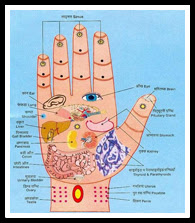 Acupuncture with fingers rather than needles. Like acupuncture the idea is to stimulate the flow of energy along the body’s natural channels. Acupressure is a cross between acupuncture and massage said to be very good for dealing with headaches, backache, muscle pains etc.
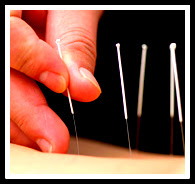 The Chinese, who invented acupuncture, believe that the human body contains 12 channels along which internal energies flow. When one of these channels is blocked illness develops. Acupuncturists stick needles into the skin in an attempt to unblock the channels and allow the energy flow to continue. Over 1000 acupuncture points have now been identified. Acupuncture does work – particularly in the treatment of pain and it is recommended by the World Health Organisation. In addition to helping patients with pain it also works in the treatment of many other disorders.
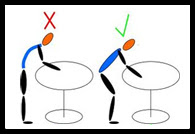 Founded at the turn of the last century by an Australian actor called F.M. Alexander who believed that many illnesses develop because we don’t sit, stand or walk properly. People who’ve been trained in the Alexander technique claim it helps relieve many health problems – particularly bone and joint troubles, backache and stress disorders.
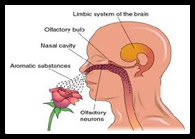 Aromatherapists claim that by massaging patients with sweet smelling oils they can treat an enormous range of physical and mental disorders. They choose scented oils from specific flowers, plants and trees to influence moods and treat diseases. The massage itself may be soothing and relaxing.
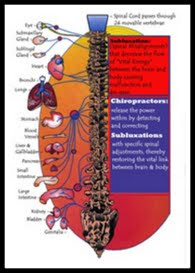 Chiropractic was established by a Canadian called Daniel Palmer who believed that 95 per cent of illnesses are caused by displaced bones in the spine – and can, therefore, be cured by manipulating the spine. There is evidence available to suggest that chiropractic can be useful in the treatment of bone and joint disorders – for example backache.
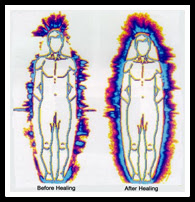 There are thousands of healers in practice. Healers work in many different ways. Some lay their hands on their patients. Some say they don’t need to touch their patient. Many works free of charge. There’s evidence to show that healers ran produce ‘miraculous’ results. No one really knows whether this is because they trigger off the body’s self-healing powers or because of mysterious forces. There are virtually no risks or side effects with healing.
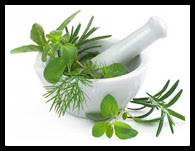 One of the oldest branches of medicine. Many modern drugs are derived firm herbal remedies. Drug companies base much of their research on looking for useful compounds that can be prepared from plants. About a third of the drugs doctors prescribe are plant-based. Today many millions of people have turned away from orthodox medicine and prefer to use herbal remedies. Herbal remedies are available for just about every illness imaginable.
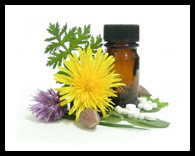 Modern homeopathy was invented by Samuel Hahnemann in the 19th century. He believed that he could cure patients with minute doses of drugs. The theory is that the incredibly small doses trigger off the body’s self-healing mechanisms. Homeopathy has much in common with vaccination in which a small amount of a foreign substance is introduced into the patient’s body in order to stimulate the body’s defence mechanisms. It really does seem to work.
 Modern hypnotherapy began with Franz Mesmer in Vienna in the 18th century. When used by a skilled expert it can be useful and effective. There’s evidence to show that hypnotherapy can help patients relax and deal with stress.
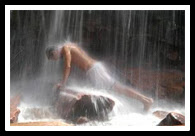 Simply means treatment using water. Hydrotherapy is practised in many health farms and alternative clinics. You can sit in it, be sprayed with it or drink it. You can have it very cold or very hot. Those who believe in hydrotherapy claim it can be used to treat all sorts of illnesses.
 Four thousand years ago Hindu doctors used to play soothing music while surgeons operated. They used to have music played in the wards too – they believed it helped patients get better. They may have been right. The value of music therapy seems clear. Music helps cure emotional and mental problems – and helps relieve pain.
 Many modern diseases are caused by stress – and by our inability to relax. Meditation is a relaxation technique which works – and which can be easily learned for home use.
 Naturopathy was founded by Hippocrates around 400 BC who said that the best way to maintain good health was to eat and exercise moderately and carefully. Simple naturopathy means having a healthy lifestyle.
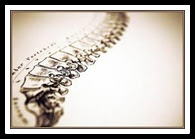 Founded in 1874 by Andrew Tayler Still, an American who believed that the faults in the bony part of the body cause many diseases. Osteopaths claim that they can treat illnesses by manipulating the body – especially the spine. I don’t think there is much difference between chiropractic and osteopathy. Excellent for problems such as backache. Some experts say that half of the patients going to an osteopath have backache. Many doctors with back trouble seek help from osteopaths.


